by Patrix
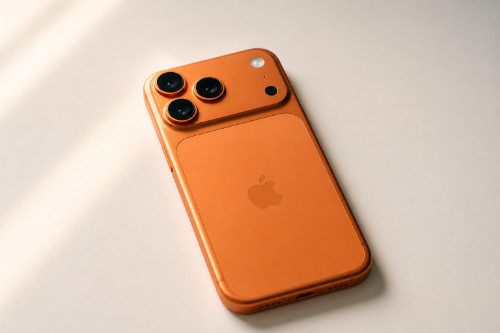
Apple just reported its best March quarter on record. Revenue hit $111.2 billion, earnings came in at $2.01 per share, and guidance for the June quarter points to 14 to 17 percent growth. By every conventional measure, this is a strong quarter.
But read the analyst notes closely and a consistent theme surfaces: this is an iPhone-driven hardware cycle, and Apple Intelligence has not yet moved the upgrade needle. The AI growth story that Wall Street wants Apple to tell is still ahead of the revenue it has actually delivered.
The iPhone is doing the heavy lifting
iPhone revenue came in around $57 billion, with growth in the mid-to-high teens. China, which had been a persistent headwind, swung to roughly 28 percent growth in the quarter. That’s the real upside story: a geographic recovery in one of Apple’s most important markets, driven by premium device demand.
Deepwater’s Gene Munster described it as an iPhone supercycle, with upgrade rates rising from low single digits to near 20 percent growth in recent quarters. That’s meaningful momentum, but Munster also flagged the obvious follow-on: Wall Street currently models iPhone growth dropping to around 5 percent in 2027. A supercycle, by definition, eventually slows.
Apple’s installed base now sits above 2.5 billion active devices. Bank of America framed this as the long-term setup for future upgrades, particularly if Apple Intelligence and Siri features become compelling enough to accelerate replacement demand. That framing is accurate, and it also underscores the current situation: most of that base is not upgrading right now, and the features that would theoretically drive them to aren’t yet persuasive enough to act on.
Margins held up better than expected
Gross margin reached approximately 49.3 percent, beating expectations. Services is doing meaningful work here. App Store, iCloud, Apple Pay, and Apple TV+ revenue carries higher margins than hardware and stabilizes profitability when hardware mix gets complicated.
Investing.com called Services a stabilizing force rather than a standalone growth engine. That’s the right framing. Services isn’t growing fast enough to rewrite Apple’s identity, but it cushions quarters where hardware faces headwinds and keeps the overall margin profile strong.
JPMorgan highlighted Apple’s margin outperformance as a function of pricing power, premium product mix, and continued Services expansion. The ability to sustain nearly 50 percent gross margins while running a hardware-led business is genuinely unusual, and it’s one of the reasons Apple’s financial results consistently beat expectations even when product cycles slow.
Supply constraints masked stronger underlying demand
Goldman Sachs raised a point that doesn’t get much attention in the headlines: Apple likely left revenue on the table. The firm estimates results could have been 200 to 300 basis points higher without component supply limitations, suggesting actual demand exceeded what Apple could fulfill.
This matters for two reasons. First, it means the reported numbers may understate momentum. Second, and more concerning, Needham flagged that AI infrastructure spending by Amazon, Google, and Meta is tightening competition for the advanced nodes and memory that Apple needs. Hyperscalers are paying up to secure supply, which puts pressure on Apple’s access and costs heading into the next product cycle.
Rising memory costs are already showing up as a near-term concern. Apple flagged them heading into the June quarter. How quickly component availability normalizes will shape how much of the underlying demand shows up in reported numbers over the next several quarters.
Apple Intelligence still has not driven upgrade behavior
This is the clearest signal in the analyst commentary, and the one most relevant to anyone trying to decide whether to buy now or wait.
Oppenheimer said it directly: Apple’s AI investment is ahead of clear revenue contribution. Apple Intelligence features and improvements to Siri have not produced a measurable shift in upgrade demand. The current cycle is running on hardware momentum and China recovery, not on AI-driven urgency.
WWDC is the next meaningful test. Upcoming software features expected at the June developer conference are the first real opportunity for Apple to show whether its AI capabilities can become must-have rather than nice-to-have. If the demos don’t clear that bar, the gap between investment and revenue impact stays wide through the end of the year.
Wedbush took the most optimistic view, framing WWDC and Apple’s evolving AI strategy as potential catalysts for additional upside. The bull case requires Apple Intelligence to land features compelling enough to pull forward upgrades from users who otherwise would have waited. That case is possible. It hasn’t been made yet.
One transition worth watching
Buried in the analyst coverage: Tim Cook will hand the CEO role to John Ternus later in 2026. Cook built operational discipline and expanded Services into a durable margin layer. Ternus is the hardware engineer behind the Apple Silicon transition, one of the most significant product decisions Apple has made in decades.
The handoff signals continuity in a product-first strategy. There is no suggestion of a pivot toward services-led or AI-platform positioning. The next chapter at Apple is still a product story.
The practical read for Apple buyers
The current hardware lineup is strong. The Mac mini M4, the MacBook Air, and the iPhone 17 family are all genuinely good products with no obvious reason to wait. If your device is due for a replacement, now is a reasonable time.
If you are holding out specifically for Apple Intelligence to justify the upgrade, the honest advice is to wait for WWDC. The features that would make AI a compelling upgrade reason have not shipped in that form yet. They might by fall. They might not. Building your buying timeline around AI capabilities that analysts describe as investment ahead of revenue puts you in a waiting game with no guaranteed end date.
Apple had a record quarter. The next one is a legitimate question. That is not bearish — it is just honest.

by Patrix
The Deal That Changes Everything
The partnership, confirmed January 12, positions Google’s Gemini as the foundation for Apple’s future AI features. While financial terms weren’t disclosed, reports suggest Apple could be paying around $1 billion annually.
This goes beyond Apple’s existing OpenAI partnership for ChatGPT integration. The Gemini deal is foundational, with Google’s models forming the base that Apple will build upon for its own Apple Foundation Models. According to the joint statement, Apple determined that “Google’s technology provides the most capable foundation” after careful evaluation.
Critically, Apple Intelligence will continue to run on Apple devices and through Private Cloud Compute, maintaining privacy standards even while leveraging Google’s AI. The first Gemini-powered features could debut in iOS 26.4 beta as soon as next month, with public demonstrations expected to follow.
Why Apple Needed This Partnership
To understand why this matters, you need to know just how badly Apple’s AI strategy has struggled.
At WWDC 2024, Apple unveiled impressive Siri demonstrations showing an assistant that could answer complex questions like “When is Mom’s flight landing?” by pulling information from emails and cross-referencing real-time data. It looked like Apple had finally figured out AI.
Those features never arrived. In March 2025, Apple acknowledged that “it’s going to take us longer than we thought,” pushing the timeline to “the coming year.” Bloomberg reported that executives internally called the delay “ugly” and “embarrassing.”
The delay triggered class-action lawsuits from customers who bought iPhone 16 models specifically for the advertised AI features. Apple had marketed Siri capabilities that didn’t exist and wouldn’t exist for at least another year.
The technical challenge was real. Personal context awareness, on-screen awareness, and sophisticated reasoning require AI models that Apple’s in-house development simply couldn’t deliver on schedule. Meanwhile, ChatGPT reached 800 million weekly users, Google launched Gemini 3, and even Amazon announced Alexa+. Apple was falling behind.
What This Means for Siri
The Gemini partnership gives Apple access to trillion-parameter scale models, far more sophisticated than its current on-device capabilities. This makes the promised features technically feasible: personal context understanding, on-screen awareness, deeper app integration, and complex multi-step tasks.
But there are actually two phases. The spring 2026 update (iOS 26.4) brings enhanced capabilities powered by Gemini. Later in 2026, likely with iOS 27, Apple plans a complete transformation to a chatbot-style Siri with natural conversations and extended interactions.
This chatbot version, developed under the codename “Campos,” will offer both voice and text interaction and replace the current Siri interface across all Apple devices. Instead of 13 years of short commands and responses, you’ll have extended conversations, ask follow-up questions without repeating context, and tackle complex tasks requiring multiple steps.
The Privacy Question
Using Google’s AI while maintaining Apple’s privacy promises sounds contradictory. The answer is Private Cloud Compute, the infrastructure Apple built specifically for this challenge.
When you make a request, Apple Intelligence first tries to process it on-device. For complex requests, it’s sent to Private Cloud Compute servers running on custom Apple silicon with a hardened operating system. Even though they use Gemini models, these servers are controlled by Apple, and processing happens within Apple’s infrastructure (not Google’s).
Key privacy protections include no persistent data storage (data is deleted immediately after processing), no access for Apple staff (servers lack remote shells or debugging tools), verifiable transparency (independent researchers can inspect the server code), and end-to-end encryption.
Think of it this way: Google provides the AI model technology, but Apple runs it on secure servers they control. It’s like buying software but running it on your own secure infrastructure. Data never touches Google’s servers.
That said, when you explicitly use third-party AI features (like asking Siri to use ChatGPT), those requests aren’t covered by Private Cloud Compute’s privacy guarantees.
What This Means for the AI Landscape
This partnership validates Google’s AI strategy and deals a blow to OpenAI’s ambitions.
For Google, this is massive. It generates potentially $1 billion annually and puts Gemini in front of over 2 billion Apple devices. Google’s market cap surpassed $4 trillion after the announcement, briefly exceeding Apple’s for the first time since 2019.
For OpenAI, it’s concerning. While Apple isn’t ending ChatGPT integration, Gemini is clearly the primary partner. OpenAI loses the distribution advantage of deep Apple integration just as its usage growth reportedly slows.
The partnership also highlights a broader truth: training state-of-the-art AI models may be commoditizing the technology itself. If models reach similar capabilities, the differentiator becomes distribution, integration, and user experience. Apple is betting on this future, focusing on seamless experiences and ecosystem integration rather than competing on model development.
The Risks Apple Is Taking
For a company built on controlling the entire stack, relying on a competitor’s AI models represents significant risk.
Dependency is the obvious concern. What if Google changes terms, raises prices, or prioritizes Pixel devices? Apple is building features and experiences on top of Gemini. If that foundation becomes unreliable, there’s a serious problem.
Timing matters too. Apple has already delayed these features once, facing lawsuits and backlash. Another miss would be devastating for user trust.
The regulatory environment adds uncertainty. Google already pays Apple billions to be the default Safari search engine, a relationship under antitrust scrutiny. Adding a major AI partnership could attract more regulatory attention.
And some Apple users specifically choose Apple because they don’t trust Google. Even with solid technical privacy protections, Google’s involvement may make some users uncomfortable.
What Comes Next
The iOS 26.4 beta, expected in February, will be our first look at the Gemini partnership in action. Apple will likely demonstrate features publicly to rebuild confidence after last year’s delays.
Spring brings the enhanced Siri capabilities originally promised at WWDC 2024: personal context awareness, on-screen awareness, and deeper app integration. Later this year comes the full chatbot-style transformation, likely unveiled at WWDC 2025 and shipping with iOS 27.
The bigger question is whether this represents a permanent strategy shift or a temporary bridge. The multi-year deal suggests Apple doesn’t expect to replace Gemini soon, but the company is clearly investing heavily in its own AI research.
We may be seeing the emergence of an ecosystem where foundation models become commoditized infrastructure, like cloud computing. Companies like Google, OpenAI, and Anthropic compete on building the best models, while Apple competes on delivering the best experiences on top of them. In this world, Apple’s privacy approach and ecosystem integration are the differentiators, not whether the AI was built in-house.
The Bottom Line
Apple’s Gemini partnership is a pragmatic move, acknowledging that building state-of-the-art AI models requires resources better spent elsewhere. Rather than competing in an AI arms race, Apple focuses on what it does best: intuitive, reliable user experiences that respect privacy.
For users, this means a Siri that finally delivers on its promise, powered by one of the most advanced AI models available while maintaining privacy through Private Cloud Compute. The integration should feel seamless, like a natural part of the Apple ecosystem.
But execution is everything. Apple has set expectations twice for revolutionary Siri improvements and failed both times. When iOS 26.4 launches in the coming weeks, and when chatbot-style Siri debuts later this year, they need to work flawlessly.
If Apple delivers, this could be remembered as the moment it adapted for the AI era while staying true to its values. If it stumbles again, the narrative becomes a company that couldn’t keep up and needed a competitor’s help. We’ll know which story we’re telling very soon.

by Patrix
Anthropic’s Claude has matured into a credible alternative to OpenAI’s GPT line, with a clear philosophical stance and increasingly competitive capabilities. What matters now is not that Claude exists, but that it represents a distinct approach to how advanced models are trained, constrained, and deployed.
For Apple-focused users and developers, this matters because Claude’s design choices align unusually well with the priorities Apple has signaled around privacy, safety, and on-device or tightly controlled intelligence.
What Anthropic Built and Why It Is Different
Anthropic was founded by former OpenAI researchers who disagreed with the prevailing direction of large language model development. The result of that split is Claude, a model family designed around “constitutional AI,” where the system is guided by explicit principles rather than opaque reinforcement learning rules.
Claude is not positioned as a maximalist model that can do everything at any cost. Instead, it is designed to be predictable, steerable, and resistant to misuse. That constraint-first mindset shapes everything from how Claude answers sensitive questions to how it handles long documents and multi-step reasoning.
This is not a marketing distinction. It affects how the model behaves in real workflows.
Claude’s Core Strengths
Claude has improved rapidly over the past year, particularly in areas that matter to knowledge workers and developers rather than casual chat users.
Key strengths include
- Long context windows: Claude can reliably ingest and reason over very large documents, including technical specs, contracts, and codebases.
- High-quality summarization: It excels at preserving nuance rather than flattening complex material into generic bullet points.
- Consistent tone and instruction-following: Claude is less prone to abrupt style shifts or hallucinated confidence.
- Lower adversarial behavior: It is noticeably harder to prompt into producing unsafe or misleading output.
For users doing research, analysis, or editorial work, these traits matter more than novelty features.
Where Claude Still Lags
Claude is not universally superior. There are tradeoffs, and Anthropic appears willing to accept them.
Current limitations include
- Weaker tool integration compared to OpenAI’s ecosystem.
- Less aggressive multimodal expansion, particularly around image generation and real-time voice.
- More conservative responses, which can frustrate users accustomed to pushing models to their edges.
Claude is optimized for trust and clarity, not spectacle. That makes it less exciting in demos and more reliable in sustained use.
The Strategic Timing
Claude’s rise coincides with growing discomfort around how fast and loosely large models are being deployed. Regulators, enterprises, and platform owners are asking harder questions about accountability, provenance, and guardrails.
Anthropic benefits from this shift. Its emphasis on documented principles and predictable behavior positions Claude as a model that enterprises can defend internally and externally.
This timing is not accidental. It reflects a bet that the next phase of AI adoption will favor restraint over raw capability.
Why This Matters to Apple Users
Apple has been explicit about its priorities: privacy, user trust, and tightly integrated systems. Even when Apple adopts new technologies, it does so slowly and with heavy emphasis on control.
Claude’s design philosophy aligns with that worldview more closely than most frontier models.
If Apple continues to integrate generative AI at the system level across macOS and iOS, it will need models that behave consistently across millions of users, fail safely rather than creatively, and can be constrained by policy without degrading usability. Claude looks like it was built for that environment, even if it is not currently embedded there.
Implications for Developers and Creators
For developers building tools on top of language models, Claude encourages a different style of application design.
Instead of relying on prompt cleverness or brittle chains, Claude rewards clear instructions, explicit constraints, and structured inputs.
For writers, analysts, and educators, Claude is better treated as a collaborator than a generator. It shines when given real material to work with and specific outcomes to target.
This shifts how users should think about AI assistance. Less “write this for me,” more “help me reason through this.”
Who Benefits and Who Does Not
Claude benefits users who value reliability over surprise.
It is well-suited for
- Researchers and analysts.
- Legal and policy teams.
- Technical writers and editors.
- Developers working on internal or regulated tools.
It is less compelling for
- Users chasing maximal creativity.
- Social content generation at scale.
- Heavily multimodal workflows.
Anthropic appears comfortable with that tradeoff.
What to Do Differently Now
If you are an Apple-focused user experimenting with AI tools, Claude is worth treating as a primary analysis engine rather than a novelty chatbot.
Practical adjustments include
- Feeding Claude full documents instead of excerpts.
- Using it to critique and refine your own work, not replace it.
- Relying on it for synthesis and explanation, not speculation.
Claude rewards seriousness. It is at its best when the user is clear about intent and standards.
The Bigger Picture
Claude’s existence forces an important question back into the open: what do we actually want these systems to be?
Anthropic is arguing that intelligence does not need to be unbounded to be useful, and that constraint is a feature rather than a failure. Whether that view wins out remains uncertain, but Claude has reached a level where it can no longer be dismissed as a niche alternative.
For Apple and its users, that restraint-first model may end up being the most compatible path forward.

by Patrix
Bitcoin has moved sharply higher over the last several days, reclaiming the mid-$90,000 range and briefly pushing above $97,000.
The move matters because it appears tied less to a single headline and more to a familiar combo: macro expectations, institutional positioning, and market structure.
What is new
The immediate story is simple: Bitcoin broke out of a recent range and accelerated. After consolidating for weeks, buyers stepped in around key levels,
shorts got squeezed, and momentum traders followed. The price action itself is the signal: the market is willing to pay up again.
What appears to be driving the move
Macro: risk appetite and the “rates won’t rise forever” trade
Bitcoin still trades with a macro-sensitive mindset. When the market leans toward a slower pace of tightening (or eventual easing),
non-yielding assets and higher-beta trades tend to benefit. That doesn’t make Bitcoin a pure “safe haven,” but it does make it responsive
to shifts in liquidity expectations and real-rate psychology.
Institutional flows: size moves the market
When Bitcoin trends, it often does so because larger players have decided to re-risk. Spot demand that shows up as consistent buying pressure
can overwhelm the thin parts of the order book, especially after a period of lower volatility. Once key levels break, the market’s reflexes
take over: allocations get increased, hedges get adjusted, and the move feeds itself.
ETFs and regulated access: the on-ramp matters
A major structural change in the past cycle is how many investors can now get exposure without handling wallets, exchanges, or custody directly.
When ETF demand strengthens, it can translate into incremental spot buying. Just as importantly, it can change who holds Bitcoin: more “sticky”
capital and less purely speculative churn.
Market structure: shorts, liquidations, and momentum
Rapid up-moves are often intensified by forced buying. When price runs through obvious resistance, leveraged shorts can be liquidated,
which converts into market buys. That doesn’t explain the initial demand, but it can explain the speed and verticality once the move starts.
Why this matters now
This rally is a reminder that Bitcoin’s market is still reflexive: small changes in expected liquidity, plus a shift in positioning,
can produce large moves quickly. It also signals a possible regime change from “range and fade” to “breakouts get rewarded,” which affects
how traders and allocators behave across the entire crypto complex.
Who benefits and who doesn’t
Beneficiaries are long-term holders seeing renewed demand, and investors using regulated vehicles who can add exposure with less operational friction.
Losers tend to be late shorts, over-leveraged traders, and anyone forced to chase a fast market with poor risk controls.
What to do differently as a result
If you’re an investor, treat the move as a signal to revisit sizing and risk rather than a reason to rush in. If you’re trading, respect that
volatility can reprice quickly after long consolidations. Either way, the practical discipline is the same: define risk, avoid leverage you can’t
support, and don’t confuse a strong week with a guaranteed trend.
Risks and counterpoints
Bitcoin remains a high-volatility asset, and fast rallies can retrace just as fast. Macro surprises, policy shifts, and sudden changes in risk appetite
can reverse the tone quickly. A clean breakout only becomes durable if it holds key levels on pullbacks and attracts sustained spot demand.
Bottom line
Bitcoin’s very recent rise looks like a blend of improving macro tone, renewed large-buyer activity, and the market’s own mechanics amplifying the move.
Whether it becomes a lasting trend depends less on one-day headlines and more on follow-through: sustained inflows, stable risk conditions,
and buyers defending former resistance as support.

by Patrix
Apple has updated the iPad Pro with the M5 chip, extending its custom silicon roadmap into the tablet line faster than many expected. The change matters less for headline performance and more for what it signals about Apple’s priorities around sustained compute, on-device AI, and the long-term positioning of the iPad Pro as a serious production device.
What is new
The headline update is the M5 system-on-a-chip, now shipping in the latest iPad Pro. The rest of the device remains largely consistent with the prior hardware revision: the ultra-thin enclosure, tandem OLED display, Thunderbolt connectivity, and the redesigned Magic Keyboard all carry forward.
The meaningful changes are internal:
- Higher sustained CPU and GPU performance under load.
- A more capable Neural Engine aimed at local AI inference.
- Improved power efficiency at medium and high utilization.
- Incremental gains in memory bandwidth and media engines.
This is not a visual refresh. It is a platform refinement.
Why Apple moved the iPad Pro to M5 so quickly
Apple’s decision to advance the iPad Pro to M5 is not about chasing benchmarks. The M4 generation already exceeded what most iPad software could exploit. The motivation appears to be strategic.
First, Apple is aligning the iPad Pro more closely with its forward-looking compute stack. The company is investing heavily in on-device intelligence, where latency, privacy, and energy efficiency matter more than peak throughput. Advancing the Neural Engine and GPU together allows Apple to shift more workloads off the cloud.
Second, the iPad Pro increasingly serves as a silicon showcase. It is a thermally constrained device that stresses efficiency, sustained performance, and integrated accelerators. If a chip performs well here, it scales cleanly elsewhere.
Third, Apple is extending the useful lifespan of expensive hardware. iPad Pro buyers tend to keep devices longer. Shipping M5 now effectively lengthens the relevance window for professional users.
Performance in context
The most important performance change with M5 is not raw speed, but consistency.
On previous generations, demanding tasks such as multi-layer illustration, real-time video effects, or complex 3D scenes could trigger thermal throttling over time. The M5’s efficiency improvements reduce that behavior. The result is fewer performance dips during long sessions, especially when driving external displays or running sustained GPU workloads.
For day-to-day interaction, the difference is subtle. Scrolling, app launches, and multitasking already felt instantaneous. The gains appear when the device is pushed continuously.
AI and local inference are the real story
Apple is clearly positioning M5 as an AI-forward chip. The Neural Engine improvements are not marketing garnish; they are foundational to Apple’s platform direction.
On the iPad Pro, this enables:
- Faster on-device image analysis and segmentation.
- Real-time transcription and summarization without cloud dependence.
- Creative tools that apply generative or assistive models locally.
The key point is not novelty. It is control. Apple wants these workloads to be predictable, private, and available offline. M5 makes that practical at scale.
For users experimenting with local models or AI-assisted creative tools, this is the most consequential upgrade.
What did not change, and why that matters
The iPad Pro’s form factor, ports, and input model remain unchanged. That is intentional.
Apple already spent its industrial design capital in the previous refresh. The thinner chassis, lighter weight, OLED display, and accessory redesign addressed long-standing complaints. Revisiting those decisions immediately would dilute their impact.
More importantly, Apple is signaling that the bottleneck is no longer hardware design. It is software.
The M5 iPad Pro is powerful enough to expose the limits of iPadOS more clearly than ever. Multitasking constraints, background processing rules, and external display behavior now matter more than chip speed for many professional users.
Who benefits from the M5 iPad Pro
This update is not for everyone. It is targeted.
The clearest beneficiaries are:
- Illustrators and designers working with large, layered files and real-time effects.
- Video professionals doing on-device editing, color grading, and playback with effects.
- Developers and researchers testing on-device machine learning and GPU-heavy workflows.
If your iPad Pro use is primarily consumption, note-taking, or light productivity, the difference between M4 and M5 will be difficult to justify in isolation.
Who may not see value
The M5 iPad Pro does not resolve long-standing platform questions.
If your frustration centers on:
- Limited windowing or multitasking flexibility.
- File system friction.
- Desktop-class app availability.
Then this update will not change your experience. The hardware is ahead of the software, and that gap remains.
What Apple-focused users should do differently
The presence of M5 in the iPad Pro changes how buyers should think about longevity.
If you are buying new and plan to keep the device for several years, the M5 model is the safer bet. Its AI capabilities and efficiency improvements will age better as Apple pushes more intelligence on-device.
If you already own a recent iPad Pro, upgrading purely for M5 rarely makes sense unless your workload is constrained today. Performance headroom alone is not a workflow.
For developers and creators, the signal to watch is not the chip itself but Apple’s next moves in iPadOS. The hardware is ready. The question is how fully Apple will let it be used.
Bottom line
The M5 iPad Pro is a disciplined, strategic update. It does not redefine the device, but it strengthens Apple’s long-term position around efficient compute and local intelligence.
Apple is no longer using the iPad Pro to prove it can build fast chips. That question is settled. The M5 iPad Pro exists to make sustained performance and on-device AI boringly reliable.
Whether that matters to you depends less on benchmarks and more on how far Apple is willing to push the software to meet the hardware it is now shipping.
